Disclosure: Delia Dental Clinic provided my treatment as part of a collaboration and I also appear in some of their promotional material. However, this article reflects my genuine personal experience and opinions throughout the process.
For most of my life, I was self-conscious about my teeth.
That is a strange thing to admit publicly, especially as someone who has spent so much of his adult life pointing cameras at the world and, often, back at himself. I am an Australian filmmaker, editor and YouTuber, and through CarlTravels.com I have documented travel across Australia, Germany, Japan, Thailand, Vietnam and plenty of places in between. I have spent significant time living in Hanoi, walking its narrow lanes, drinking egg coffee, filming street scenes, editing late into the night and building a life around travel stories.
But when I looked back through years of old photos and travel footage, I started noticing something that made me uncomfortable: I often smiled with my mouth closed. Sometimes I barely smiled at all.
It was not something I consciously planned. It was more of a reflex. Put a camera in front of me, and I would speak confidently enough. Ask me to stand in front of a landmark or smile in a thumbnail, and suddenly I could feel myself holding back. When your face becomes part of your work, you begin to notice the small ways insecurity shapes how you appear in the world.
Fixing my teeth was something I had thought about for years, but I kept postponing it. Dental work in Australia can be expensive, and because my teeth were not causing me daily pain, it was easy to tell myself it could wait. Then I spent more time in Vietnam and began meeting international visitors who were travelling here for dental treatment. Some came for implants, some for veneers, some for crowns, some for general treatment they had delayed for years.
That was when I started looking seriously into dental tourism Vietnam options, especially in Hanoi.
Before I go any further, I want to be clear about the nature of this article:
Delia Dental Clinic provided my treatment as part of a collaboration and I also appear in some of their promotional material. However, this article reflects my genuine personal experience and opinions throughout the process.
This is not a clinic advertorial. It is my first-person account of what happened, why I decided to do it, what surprised me, what I liked, what I would tell other travellers to think about, and why the most important moment of the whole experience was not when they said yes, but when they said no.
Watch My Full Experience
You can watch my full experience getting dental crowns in Hanoi here:
Why I Decided to Fix My Teeth
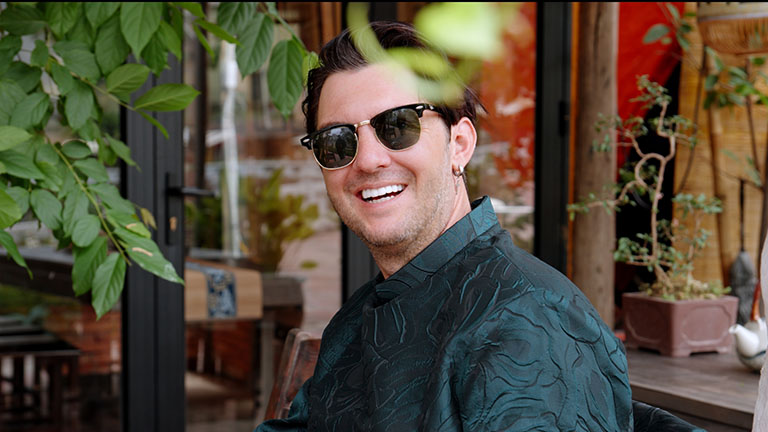
For years, my teeth were something I managed rather than addressed.
I would smile in a way that felt controlled. I would choose angles carefully. I would laugh freely with friends but become more aware of my mouth when a camera was nearby. It sounds small, but when your work involves being on camera, small insecurities can become loud.
As a travel filmmaker and YouTuber, I spend a lot of time in situations where I cannot completely control how I look. I might be filming in harsh midday sun in Vietnam, recording a piece to camera in a busy market, standing in front of a temple in Japan, or trying to capture a spontaneous moment while travelling through Thailand. You do not always get perfect lighting, perfect framing or a second take. Sometimes you just have to show up as you are.
When I reviewed old footage, I started to see a pattern. There were clips from Australia, Germany, Japan and Vietnam where I looked happy but restrained. In photos, I noticed the same thing. I could remember the moments clearly: beautiful locations, great people, good memories. Yet in the images, I often looked as though I was holding something back.
That was frustrating because travel has given me so much confidence in other areas of life. Living overseas teaches you to adapt. Filmmaking teaches you to observe. YouTube teaches you to get comfortable with imperfection. But my teeth remained one of those personal things I kept pushing into the background.
I had thought about crowns and other cosmetic dentistry Vietnam options before, but I was cautious. Teeth are not like buying a jacket or choosing a hotel. Dental treatment is medical treatment. You live with the result every day. If something goes wrong, it can affect your health, your appearance and your wallet.
Still, after spending a lot of time in Hanoi, I began to realise that dental tourism Hanoi was not some obscure side industry. It was becoming a serious reason people travelled to Vietnam. I met tourists who had flown in from Australia, New Zealand, the United States, the UK and Canada because the cost difference was significant, but also because they had found modern clinics with English-speaking staff and digital equipment.
Eventually I reached a point where waiting felt less sensible than investigating. I did not want to rush into anything, but I did want to know what was possible. So I booked a consultation and began the process.
Why Vietnam Has Become a Dental Tourism Destination
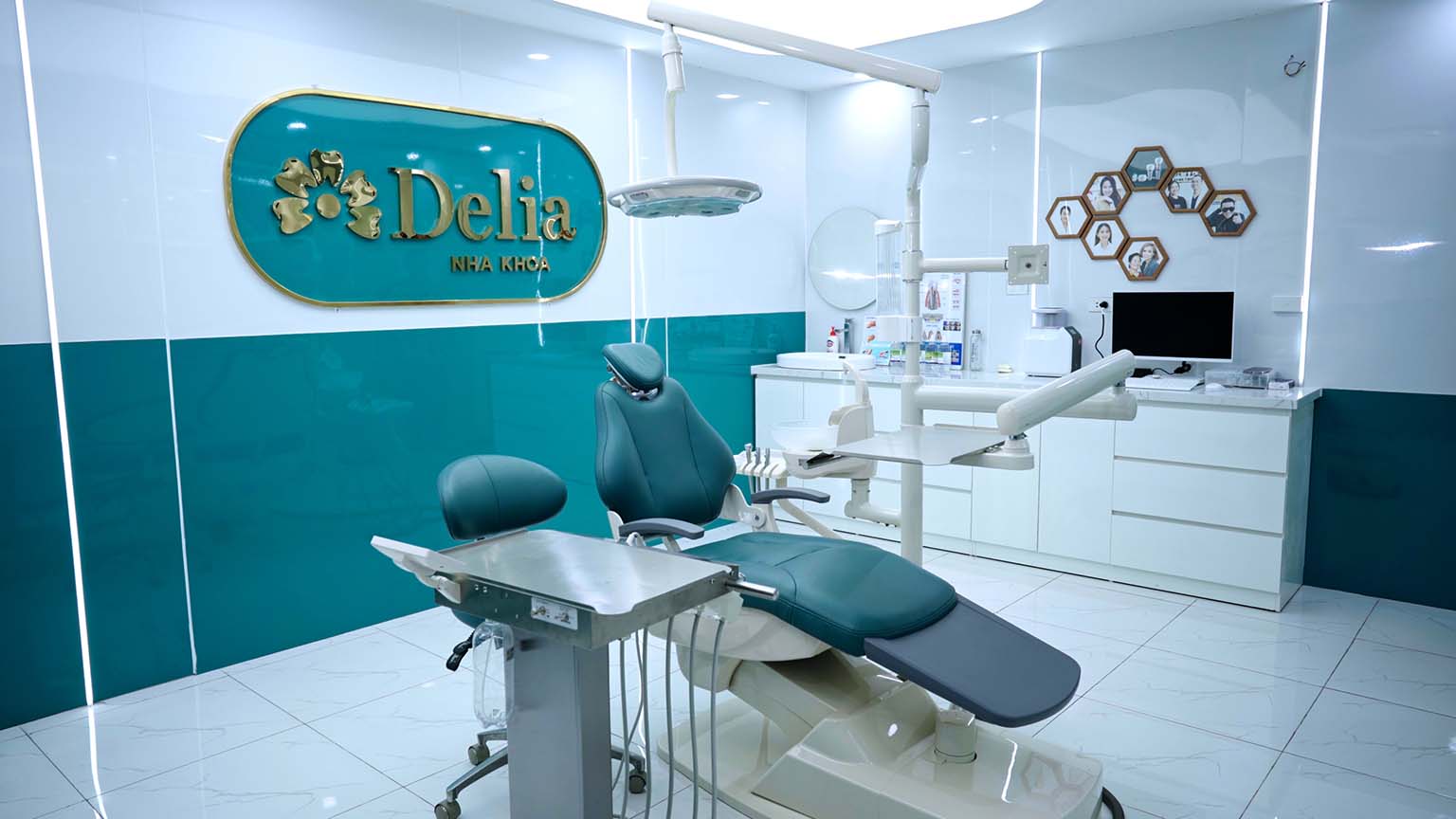
Vietnam has become one of Southeast Asia's most interesting destinations for dental tourism, and it is not hard to understand why.
For travellers from countries like Australia, the United States, the UK and Canada, dental treatment can be expensive enough to delay for years. Even when people have insurance, cosmetic or restorative procedures may not be fully covered. That gap has created a growing international market for people looking at dental treatment Vietnam options while also spending time in a country they want to visit.
Vietnam sits in a practical position for this. It is already a major travel destination. Hanoi, Ho Chi Minh City, Da Nang, Hoi An, Nha Trang and other places attract visitors for food, culture, beaches, history and affordability. Once travellers are already comfortable coming here, the idea of booking dental work alongside a trip becomes more realistic.
The cost difference is one of the obvious reasons people start researching an affordable dentist Vietnam option. Procedures such as crowns, veneers, implants, whitening and general restorative work can cost substantially less than in many Western countries. That does not mean the cheapest option is the best option, and it definitely does not mean price should be the main factor. But for many people, the lower cost makes treatment possible when it might otherwise remain out of reach.
Modern clinics are another reason Vietnam has become more visible in this space. In Hanoi and Ho Chi Minh City especially, there are clinics using digital scans, imaging systems and treatment planning tools that feel far removed from the old stereotype of overseas healthcare. The better clinics understand that international patients need clear communication, transparent planning and confidence in the process.
English-speaking staff also matter. If you are getting dental work in another country, communication is not a small detail. You need to understand what is being recommended, what alternatives exist, how many appointments may be required, what the risks are, and what follow-up looks like. For travellers, an English speaking dentist Hanoi clinic can make the experience much less stressful.
There is also the travel element. Some people come to Vietnam specifically for dental work, while others combine treatment with a longer trip. Hanoi is a good base for that because you can spend time in the Old Quarter, visit cafes, take day trips, eat well and experience the city between appointments. That said, dental tourism is not the same as a normal holiday. You need to build in recovery time, allow flexibility and avoid overloading your itinerary.
In my case, the appeal was not just cost. I was already living in Hanoi. I knew the city. I was comfortable moving around, communicating, eating locally and navigating daily life. That made the decision feel less like a leap into the unknown and more like a careful next step.
What Is Dental Tourism?
Dental tourism is when someone travels outside their home country to receive dental care. It can involve anything from a simple cleaning to more involved treatment such as crowns, bridges, veneers, implants, root canal treatment, orthodontics or full-mouth rehabilitation.
People choose dental tourism for different reasons. Cost is usually the first one discussed, but it is not the only factor. Some travellers are trying to avoid long waiting times. Others are combining treatment with a trip they already planned. Some are expatriates or digital nomads who live abroad and find it more practical to receive care where they are based.
In the context of dental tourism Vietnam, the most common procedures travellers seem to research include dental crowns Vietnam, porcelain veneers, implants, teeth whitening, fillings, cleanings and cosmetic smile design. Some people come for a single appointment. Others need multiple visits spread over days or weeks.
There are clear benefits. Treatment can be more affordable. Clinics in major cities may offer modern equipment and English-language support. Travellers can combine appointments with time in a destination they are already interested in. For people who have delayed treatment for financial reasons, it can feel like a door opening.
But there are also real considerations. Dental work should never be treated like a souvenir. If you are overseas, follow-up may be more complicated. If something needs adjustment after you return home, you may need to see a dentist locally. Standards vary from clinic to clinic, just as they do anywhere. You need to research carefully, ask questions, understand the proposed treatment and avoid being pressured into doing more than you came for.
That last point became very important in my own experience.
My First Consultation at Delia Dental Clinic Hanoi
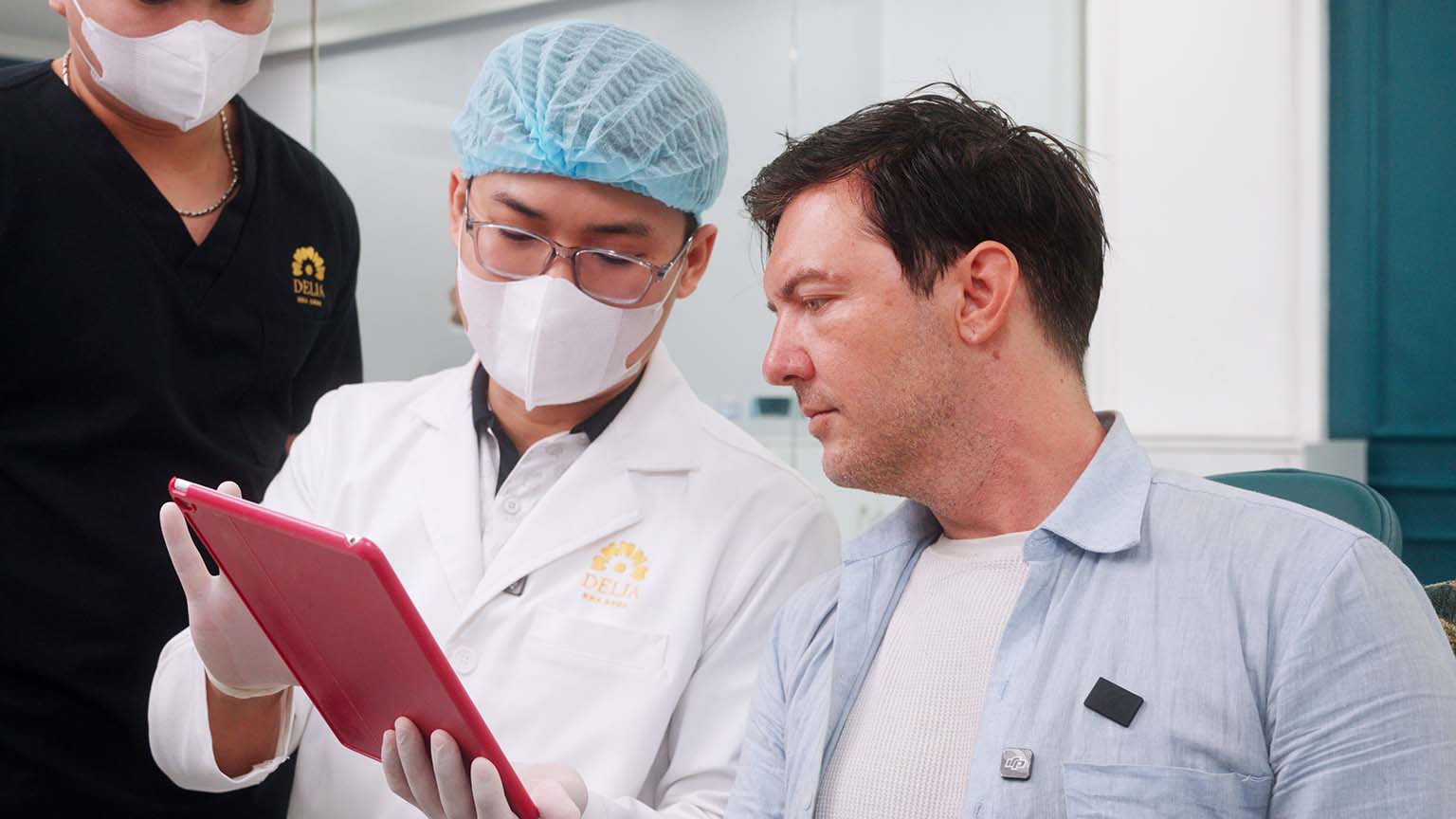
My consultation was at Delia Dental Clinic in Hanoi. The clinic is located at:
**265 Ton Duc Thang
Hang Bot
Dong Da District
Hanoi**
I mention the address as factual business information because location is important for travellers planning appointments in Hanoi. It is a central enough area to reach by taxi or ride-hailing app, and if you are staying around the Old Quarter, Ba Dinh or central Dong Da, it is not a complicated journey.
Arriving at a dental clinic in another country can feel a bit strange, even when you are used to living abroad. Dental work is personal. You are placing a lot of trust in people you have just met. My first impression was that the clinic felt organised and used to dealing with international patients. Staff were welcoming, and communication was clear from the beginning.
The consultation started with a conversation about what I wanted to improve. I explained that I had been self-conscious about my teeth for years and that I was interested in crowns. I also explained that I work on camera and that the final result mattered to me not just from a dental perspective, but from a confidence and appearance perspective.
From there, the process moved into examination and imaging. They took X-rays, used digital scans and looked closely at my teeth and gums. This part was important because it changed the conversation from "what do I want?" to "what is actually appropriate?"
That distinction matters. When you are researching a Hanoi dentist or any dental clinic Hanoi option as a traveller, it is easy to become focused on the cosmetic outcome. You imagine the smile. You compare prices. You look at before-and-after photos. But the consultation is where you should slow down and listen carefully. Good dental treatment planning should consider your existing teeth, bite, gums, long-term health and realistic expectations.
I appreciated that the team did not rush me through this stage. They explained what they were seeing, showed me scans and images, and talked through the possible direction. I had questions, and I did not feel awkward asking them. That matters because if you are considering dental tourism in Vietnam, you need to feel comfortable saying, "Can you explain that again?" or "What happens if we do not do this?" or "Are there alternatives?"
Digital Scans and Treatment Planning
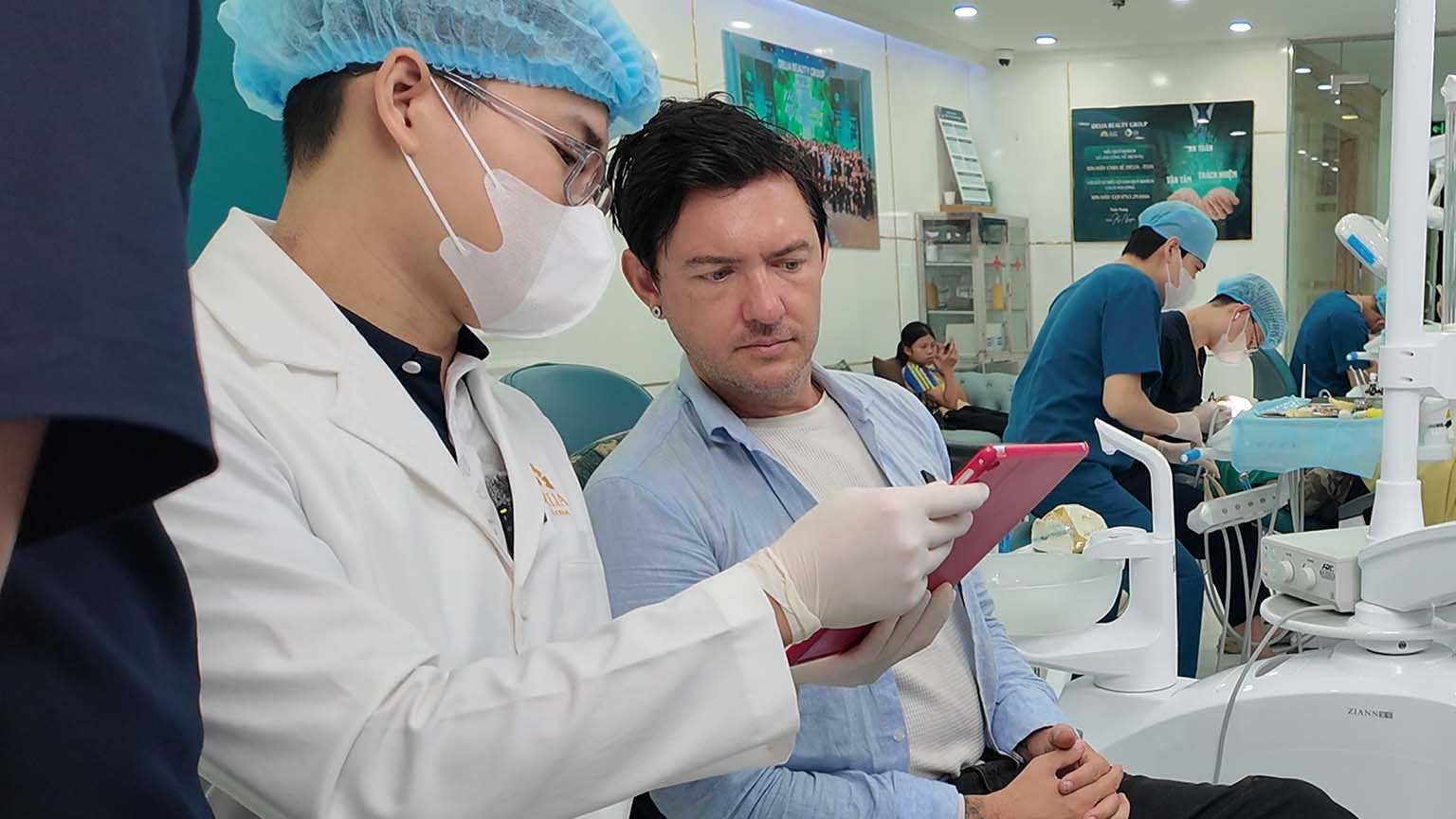
One of the things that stood out during my first appointments was the use of digital scans and imaging.
I am not a dentist, so I am careful not to overstate technical claims. What I can say from a patient perspective is that the process felt modern, visual and easier to understand than I expected. Instead of relying only on verbal explanation, I could see images and scans that helped me understand what the team was talking about.
Digital scanning also made the treatment planning feel more precise from the outside. The clinic could look at the shape of my teeth, the proposed changes and the relationship between different parts of my mouth. For someone like me, who works visually, that helped. I am used to making decisions with images, timelines, edits, frames and details. Seeing the plan in a visual way made the dental process feel less abstract.
The planning stage was also where I started to realise that cosmetic dentistry Vietnam can mean different things depending on the clinic and the patient. It is not automatically about making every tooth blindingly white or creating a generic smile. At least in my case, the discussion was about what would suit my face, what would look natural on camera and what would be realistic based on my dental situation.
I wanted an improvement, but I did not want to look like a completely different person. That was important to me. As someone who appears on camera, I wanted to feel more confident while still looking like myself.
The planning process gave me a chance to think through those details before treatment began. It also gave the clinic a chance to assess whether everything I wanted was advisable.
And that led to the most surprising part of the whole experience.
The Surprising Reason I Trusted Delia More
This was the moment that built the most trust for me.
I had gone into the process wanting work performed on my lower teeth as well. In my mind, if I was finally fixing something I had been self-conscious about for years, I wanted to do it properly. I had already built up the idea that treatment would include the lower teeth, and emotionally I was ready for that.
But after examining my mouth, the clinic identified concerns around my gum health. They advised against proceeding with the lower teeth at that time.
I will be honest: initially, I was disappointed.
When you have spent years thinking about fixing your smile, and you finally reach the point of doing something about it, being told "no" is not what you want to hear. Part of me wanted the complete transformation. Part of me wanted the clean before-and-after story. Part of me had already imagined walking out with everything done.
But the more I thought about it, the more that decision mattered.
They could have simply said yes. I was already there. I was interested in more work. From a purely commercial point of view, additional treatment would have meant more procedures. Instead, they looked at my actual situation and told me that doing the lower teeth was not appropriate at that time.
That changed how I viewed the clinic.
For me, trust in healthcare is not built by someone agreeing with everything you want. It is built when someone is willing to disappoint you in the short term because they believe it is better for you in the long term. That is especially important in dental tourism, where travellers can be vulnerable to upselling, rushed decisions or the temptation to do everything quickly while overseas.
Being told no made me trust the process more. It showed me that the recommendation was not simply about selling additional procedures. It was based on my condition, my gums and what they believed was suitable at that point.
Looking back, that was more impressive than the scanners, the interiors or the technology. Those things matter, but they are not the heart of healthcare. The heart of healthcare is judgment. It is the willingness to say, "This is not the right move right now."
If you are considering dental tourism Hanoi or looking for a dentist Hanoi option as a traveller, this is one of the biggest pieces of advice I can give: pay attention to whether a clinic is willing to say no. A clinic that explains limits, risks and reasons not to proceed may be giving you more valuable information than one that promises everything immediately.
That moment made me feel like I was being treated as a patient, not just as a customer.
The Crown Procedure Step by Step
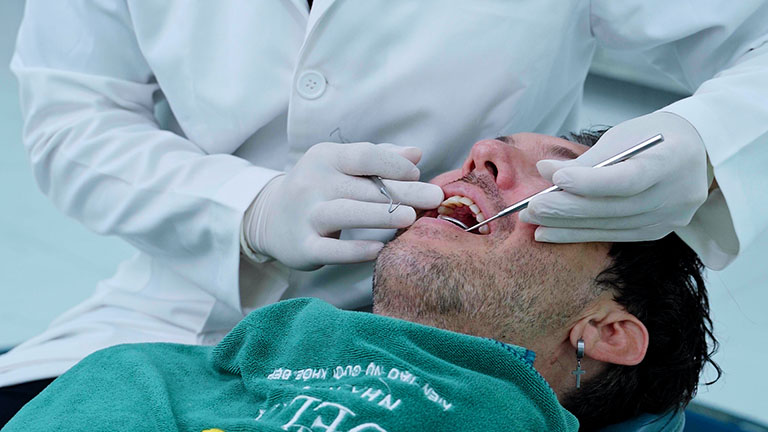
Once the plan was agreed, the crown procedure happened over multiple appointments.
I will describe this from my perspective as a patient rather than as a medical explanation. If you are considering dental crowns Vietnam, you should always ask your own dentist or clinic to explain the specific steps for your situation, because every case is different.
The first stage was preparation. The team explained what they were going to do, what I should expect during the appointment and how the timeline would work. Communication was important here because dental treatment can feel intimidating when you do not know what is happening next. I appreciated being told what was coming before each stage.
During the appointments, comfort was a big focus. Dental treatment is never exactly my idea of a relaxing afternoon, but the staff checked in with me and made the process manageable. There were moments where I had to sit still for longer than I would have liked, and moments where I was very aware I was having dental work done, but nothing felt chaotic or rushed.
Temporary stages were part of the process before the final crowns were fitted. This was useful because it gave me a sense of how the final result might look and feel. It also gave room for adjustments and communication. I could talk about how things looked, how they felt and whether anything needed attention.
The fitting process was one of the more memorable parts because it was the point where the idea became real. Up until then, I had seen scans, plans and temporary versions. But seeing the final crowns in place was different. It is a strange feeling to look in the mirror and see a version of yourself that feels both new and familiar.
Throughout the process, I kept thinking about how long I had delayed this. That is not to say everyone should rush into dental work. Quite the opposite. But I did have that feeling of, "Why did I let this bother me for so long without even properly exploring my options?"
The answer, of course, is that dental work is expensive, emotional and easy to postpone. But once I was in the chair and the process was underway, I felt glad I had finally taken the step.
Technology and Equipment
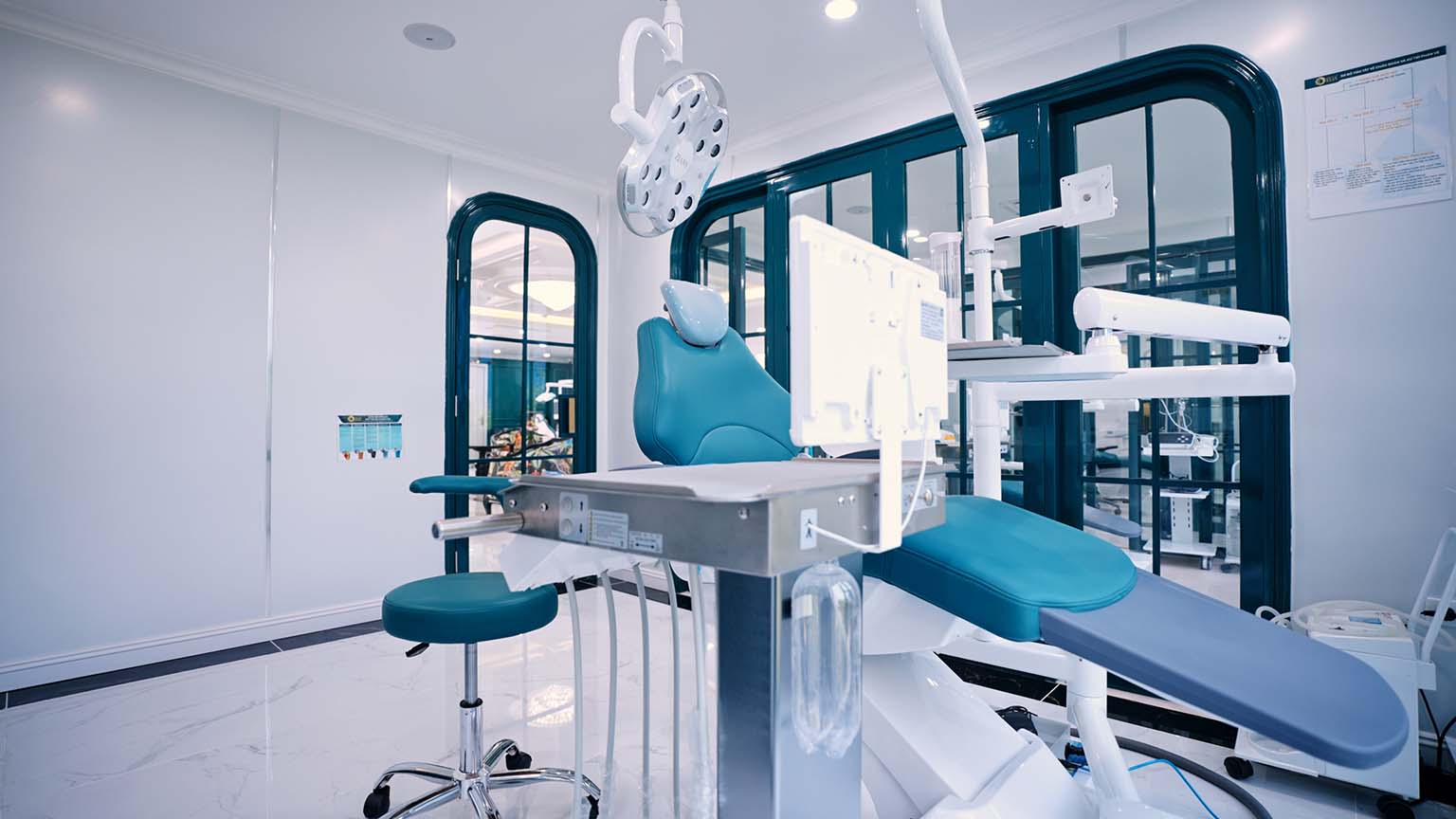
From a traveller's perspective, one of the reassuring things about my experience was seeing the technology and equipment used during the process.
Again, I am not making technical medical claims here. I am not qualified to compare equipment specifications or judge one clinic's tools against another. What I can speak to is how it felt as a patient.
The digital scanning made the process more visual. Imaging helped me understand what the dentist was seeing. Planning tools made the proposed treatment easier to discuss. The clinic environment felt modern and organised, which matters when you are receiving dental treatment overseas.
Technology alone does not make a clinic good. A camera does not make someone a filmmaker, and a scanner does not automatically make someone a great dentist. The skill, judgment and communication of the people using the tools matter more. But when modern equipment is combined with clear explanation and careful planning, it can make the patient experience much more comfortable.
For international patients, this is especially important. If you are travelling for dental treatment Vietnam services, you may not have the same familiar reference points you would have at home. You are in a different country, possibly working across language and cultural differences, and making decisions in a compressed travel timeline. Anything that improves clarity is valuable.
In my case, the technology helped me feel more involved in the process. I could see what was being discussed rather than just nodding along. That made me more confident asking questions and understanding the plan.
Seeing the Final Result
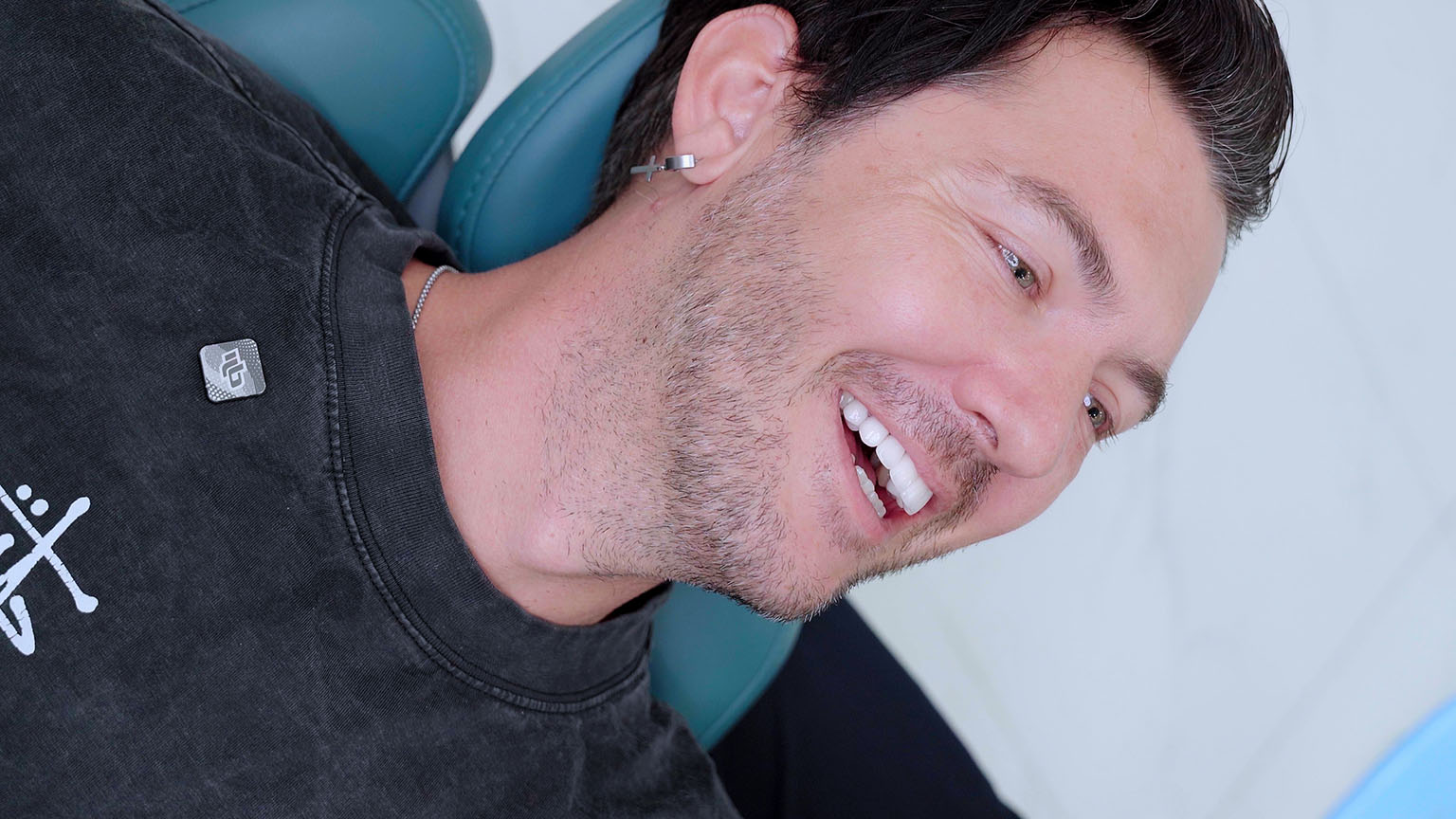
Seeing the final result was emotional in a way I did not fully expect.
I had imagined feeling pleased, maybe relieved. But what surprised me was how quickly I started thinking about old photos and videos. I remembered the clips where I had held back my smile. I remembered thumbnails where I had chosen a more serious expression because I felt awkward showing my teeth. I remembered group photos where I looked happy but guarded.
When I looked in the mirror after the crowns were fitted, I did not feel like I had become a different person. I felt like a barrier had been removed.
That is an important distinction. Good cosmetic work, at least for me, was not about becoming someone else. It was about feeling less distracted by something that had been bothering me for years. It was about being able to smile on camera without immediately thinking about my teeth.
As someone who works both in front of and behind the camera, confidence is practical. It affects how you present, how relaxed you look, how freely you laugh and how willing you are to use a shot. Since getting the crowns, I have noticed myself feeling more comfortable in front of the lens. I do not think about my teeth in the same way. I do not automatically control my smile as much.
That does not mean dental work magically fixes every insecurity. It does not. Confidence is complicated, and nobody should expect one procedure to transform their entire life. But for me, this was one of those changes that had a quiet but real effect. I felt more at ease.
And after years of avoiding that part of myself, that mattered.
Pros and Cons of Getting Dental Work in Vietnam
Dental tourism can be a good option for some people, but it is not something to approach casually. Here are the main pros and cons I would consider after going through the process myself.
Pros
Cost can be significantly lower. For travellers from Australia, the USA, the UK and Canada, the price difference can be one of the biggest reasons to look at dental tourism Vietnam. Many people are able to access treatment they might delay or avoid at home.
Modern clinics are available in major cities. Hanoi and Ho Chi Minh City both have clinics using digital scans, imaging and contemporary treatment planning tools. You still need to research individual clinics carefully, but modern options do exist.
English-speaking support can make the process easier. If you choose an English speaking dentist Hanoi clinic or a clinic used to international patients, communication may be much smoother than you expect.
You can combine treatment with travel. Vietnam is a fascinating country to spend time in. Hanoi, in particular, gives you food, culture, history, cafes and day trips between appointments.
The experience can feel more personal than expected. In my case, I did not feel like I was being pushed through a system. The consultation and planning stages felt considered.
Cons
Follow-up can be complicated once you leave Vietnam. Dental work sometimes needs adjustments. If you return home soon after treatment, follow-up may require a local dentist or another trip.
Being overseas adds pressure. You may be working within visa dates, flight schedules and travel plans. That can make decision-making feel compressed.
Research is essential. Not every clinic is equal. You need to read reviews, ask questions, examine credentials, understand the proposed treatment and avoid choosing purely on price.
Communication still matters, even with English-speaking staff. Dental terms can be confusing in your own country, let alone overseas. You need to slow down and make sure you understand.
You should not overload your itinerary. If you are having dental treatment, do not plan an intense travel schedule around it. Give yourself buffer time.
For me, the pros outweighed the cons because I was already spending time in Hanoi, had time for appointments and felt comfortable with the clinic after the consultation. For someone flying in specifically for treatment, I would recommend planning carefully and building in more time than you think you need.
Delia Dental Clinic Locations
As factual business information, Delia currently operates locations in:
- Hanoi
- Ho Chi Minh City
- Thanh Hoa
The Hanoi location I visited is listed at 265 Ton Duc Thang, Hang Bot, Dong Da District, Hanoi. Public clinic information also references locations in Ho Chi Minh City and Thanh Hoa. If you are planning treatment, check directly with the clinic for the most current address, opening hours and appointment availability before making travel plans.
Map - Where Is Delia Dental Clinic Hanoi?
The Hanoi clinic is located at:
265 Ton Duc Thang, Hang Bot, Dong Da District, Hanoi
Frequently Asked Questions About Dental Tourism in Vietnam
Is dental work in Vietnam safe?
Dental work in Vietnam can be safe, but the quality depends on the clinic, dentist, procedure and your own health situation. Vietnam has modern clinics, especially in cities such as Hanoi and Ho Chi Minh City, and many serve international patients. However, you should not assume every clinic operates to the same standard. Research carefully, read recent reviews, ask about the dentist's experience, request a clear treatment plan and make sure you understand the risks and follow-up requirements. Safety is not only about equipment. It is also about diagnosis, communication, sterilisation, treatment planning and whether the clinic is willing to advise against treatment when it is not appropriate.
How much do dental crowns cost in Vietnam?
The cost of dental crowns in Vietnam varies depending on the clinic, material, number of crowns, complexity of the case and any additional treatment required beforehand. In general, travellers from Australia, the USA, the UK and Canada often find crowns in Vietnam more affordable than at home. That is one reason dental tourism Vietnam has grown. However, you should never choose crowns based on price alone. Ask what is included, whether temporary crowns are required, how many appointments are needed, what warranty or follow-up is offered and what happens if adjustments are needed later. A cheap crown is not good value if the planning is poor or the result creates problems.
Do dentists in Hanoi speak English?
Some dentists and dental clinics in Hanoi do offer English-speaking support, particularly clinics that regularly work with international patients. If you are looking for an English speaking dentist Hanoi option, confirm this before booking. Do not rely only on a website headline. Ask whether consultations, treatment explanations, consent forms and aftercare instructions are available in English. During dental treatment, communication matters. You need to understand what is being recommended, why it is being recommended, what alternatives exist and what the possible risks are. In my experience, clear communication was one of the most important parts of feeling comfortable with treatment in Hanoi.
How long should I stay in Vietnam for dental treatment?
The amount of time you need depends entirely on the treatment. A cleaning or whitening appointment may be simple, while crowns, implants, veneers or more complex restorative work can require multiple visits. If you are travelling specifically for dental treatment Vietnam services, ask for a realistic appointment schedule before booking flights. Build in extra time for consultation, scans, preparation, fitting, adjustments and recovery. I would avoid planning a tight itinerary where you finish treatment and fly out immediately. Even if everything goes smoothly, having a buffer gives you more peace of mind. Dental tourism works best when you allow time for proper planning rather than treating it like a quick errand.
Can tourists get dental treatment in Vietnam?
Yes, tourists can get dental treatment in Vietnam, and many clinics in Hanoi and Ho Chi Minh City actively work with international patients. That said, being a tourist does not remove the need for proper medical decision-making. You should still have a consultation, ask questions, understand the proposed treatment and think carefully before proceeding. Bring relevant dental records if you have them, especially for more complex work. Make sure you know how many appointments are required and what follow-up looks like after you leave the country. If you are only in Vietnam for a few days, some procedures may not be realistic or advisable.
Is Hanoi a good destination for dental tourism?
Hanoi can be a good destination for dental tourism, especially for travellers who want to combine treatment with time in a culturally rich city. It has modern dental clinics, international patient services, a wide range of accommodation and plenty to do between appointments. It is also a city I know well and have spent significant time living in, which made my own experience easier. However, Hanoi is busy, noisy and intense if you are new to Vietnam. If you are coming for dental tourism Hanoi, choose accommodation that makes transport to appointments easy, avoid overpacking your schedule and give yourself time to rest after procedures.
What should I ask during a dental consultation in Vietnam?
Ask what the dentist recommends, why they recommend it and what alternatives exist. Ask what happens if you do nothing for now. Ask how many appointments are required, what materials may be used, what the risks are, whether temporary stages are involved and what follow-up is available. If you are considering dental crowns Vietnam, ask how the crowns will be planned, fitted and adjusted. Also ask about your gums, bite and long-term maintenance. A good consultation should not feel like a sales pitch. It should feel like a careful explanation of your situation. One of the biggest trust-building moments in my own experience was being advised not to proceed with extra work.
Who should consider dental tourism?
Dental tourism may suit people who need treatment, have researched carefully, can allow enough time overseas and feel comfortable receiving healthcare outside their home country. It may also suit expatriates, digital nomads or long-stay travellers who are already spending time in Vietnam. It may not suit people who are in a rush, have complex medical issues, are uncomfortable with uncertainty or cannot manage follow-up care after returning home. Dental treatment is personal, and what works for one person may not be right for another. If you are considering dental tourism Vietnam, treat it as a healthcare decision first and a travel decision second.
Is an affordable dentist in Vietnam always a good choice?
Affordability is one of the reasons people look for an affordable dentist Vietnam option, but lower cost should never be the only reason you choose a clinic. Dental work affects your health, comfort and appearance. A good-value clinic is one that combines fair pricing with proper diagnosis, clean facilities, experienced dentists, clear communication and responsible treatment planning. Be cautious of any clinic that pushes you to make fast decisions, promises perfect results without examining you properly or recommends more work than you expected without clear explanation. The right question is not "What is cheapest?" It is "Who do I trust to make the right decision for my situation?"
What are the most common dental tourism procedures in Vietnam?
Common dental tourism procedures in Vietnam include crowns, veneers, implants, teeth whitening, fillings, cleanings, bridges and other cosmetic or restorative treatments. Some travellers come for a single issue, while others come for more extensive smile makeovers. In my case, the focus was dental crowns and improving something I had felt self-conscious about for years. The important thing is to remember that procedure names do not tell the whole story. Two people can both ask for crowns and need very different treatment plans. Your gums, bite, existing teeth and long-term dental health should all influence what is recommended.
How do I choose a dental clinic in Hanoi?
Choosing a dental clinic Hanoi option requires more than looking at before-and-after photos. Start by checking recent reviews, clinic information, dentist experience, communication quality and whether the clinic is used to working with international patients. Ask for a consultation before committing to major work. Pay attention to how they explain your situation. Do they answer questions clearly? Do they discuss risks and alternatives? Do they assess your gums and overall dental health, or do they jump straight into cosmetic recommendations? For me, the most important trust signal was not being sold more treatment. It was being told that some of the work I wanted was not appropriate at that time.
Should I get dental treatment at the start or end of my Vietnam trip?
For anything beyond a simple appointment, I would generally avoid leaving dental treatment until the final days of your trip. It is better to schedule consultations and key appointments earlier, then keep buffer time available in case adjustments are needed. If you plan treatment at the very end and something feels uncomfortable, you may have limited time to deal with it before flying home. At the same time, you probably do not want to schedule intense tours immediately after dental work. Build your itinerary around the treatment, not the other way around. Dental tourism works best when your travel plans are flexible enough to support the healthcare side.
Can I film or document my dental tourism experience?
You can ask, but always get permission from the clinic and respect other patients' privacy. Because I work as a filmmaker and YouTuber, documenting the experience was part of my collaboration with Delia Dental Clinic. That is not the same as casually filming in a healthcare environment. If you want photos or video for personal use, ask the staff what is allowed. If you plan to publish content, be clear about that in advance. From a storytelling perspective, documenting the process can be valuable because it helps other travellers understand what dental tourism in Vietnam is actually like. But healthcare spaces require sensitivity.
What was the biggest lesson from my experience?
The biggest lesson was that trust matters more than the sales pitch, the facilities or even the technology. The moment that stayed with me most was being told not to proceed with work on my lower teeth because of gum health concerns. At first I was disappointed, but later I realised that was exactly the kind of honesty I wanted from a dental clinic. It showed me they were thinking about my actual situation, not just agreeing to more treatment. If you are researching a Hanoi dentist or considering dental tourism Vietnam, look for that kind of judgment. You want a clinic that can say no when no is the better answer.